Bitget futures: contract types, account access and risks
Corrected and source-checked October 18, 2026. This revision withdraws unsupported surveys, platform scores and personal-test claims. It uses public official documents, not an author trading experiment. Earlier illustrations are retained for context: any survey, rating or performance numbers shown in them are unverified and must not be treated as evidence or current terms. Use the corrected text and current account/product rules.

Bitget offers derivative contracts whose value depends on an underlying market. Perpetual futures do not have a fixed expiry; delivery futures have settlement terms. Neither gives the same asset holding as an unleveraged spot purchase. Futures guide (checked October 18, 2026).
Leverage increases position exposure relative to margin and can amplify losses as well as gains. This guide does not establish personal use, exceptional liquidity or a tested interface advantage.
The Core Distinction: Understanding Futures vs. Spot Trading
The comparison distinguishes unleveraged spot purchases from derivative exposure. Neither column is a safety rating or a prediction of returns.
| Review item | What to verify | Limitation |
|---|---|---|
| Ownership | Spot asset holding versus derivative exposure | A derivative does not convey the same underlying holding |
| Leverage | Actual contract and position-tier limit | No universal safe leverage |
| Direction | Contract direction and borrowing requirements | Both gains and losses depend on actual exposure |
| Loss | Margin, custody and execution exposure | Either product can lose value |
| Returns | Fees, price movement and size | No linear-versus-exponential profit promise |
Copy trading and order controls: functions and limitations
Copy trading automates following eligible orders, not successful outcomes. Followers can receive different sizes or fills, or miss orders because of account settings, liquidity and platform limits. No industry-leading rank is established here.
TP/SL orders depend on trigger settings and execution conditions. A triggered market order can slip; a triggered limit order may remain unfilled. These tools do not guarantee capital protection, uptime or an exit price. TP/SL guide (checked October 18, 2026).
Assessment limits: no independent platform score or uptime benchmark is established in this guide.
Check the contract, settlement currency, margin requirements and possible loss before considering an order. A documented procedure is not a recommendation to trade.
Step-by-Step Guide: How to Get Started with Bitget Futures

The following describes an eligible account workflow, not an invitation to fund or trade. Product access depends on identity verification, location and current terms.
Phase 1: Account Setup and Fund Deposit
- Account access: check whether the relevant futures product is permitted for your location and account. Completing KYC does not unlock every product or remove regional restrictions.
- Deposit checks: confirm the supported asset, exact network, address, memo/tag if required, and sending-platform restrictions. Fiat and P 2 P routes are not available to every user.
- Account balance: identify the account mode and collateral currency actually used. Transfers and margin sharing differ between account structures; do not assume every account requires the same Spot-to-USDT-M transfer.
Phase 2: Executing Your First Futures Trade
If the product is available to your account, inspect its order screen and contract specifications before submitting anything. Labels can vary by account mode and app version.
- Select Trading Pair: Choose your preferred market, such as BTC/USDT or ETH/USDT, from the top left corner.
- Margin mode: review which balances back the position and whether automatic margin addition is enabled. Isolated and cross margin differ in exposure; neither eliminates liquidation.
- Leverage: inspect the maximum allowed for the contract and position tier. No leverage range is established here as safe or suitable for all beginners.
- Order type: a limit price controls the permitted execution price but may not fill; a market order prioritizes execution and can slip. A marketable limit order can be a taker.
- Order review: confirm long/short direction, quantity, margin, leverage, position mode and closing instructions. An order confirmation is not evidence that the trade is appropriate.
Comparison: Margin Modes for Futures Trading
Margin mode changes which collateral supports positions. Compare the actual account rules rather than treating one mode as universally safer.
| Review item | What to verify | Limitation |
|---|---|---|
| Collateral scope | Which balances support each position | Sharing can spread losses |
| Liquidation | Mark price and maintenance requirements | No inherently lower-liquidation mode |
| Additional margin | Automatic addition and account settings | A mode label alone is insufficient |
| Position impact | Shared or separate collateral treatment | No universal beginner suitability |
Position sizing and execution checks
This guide has no verified personal trading record or basis for a first-ten-trades rule. Check potential loss, collateral scope and position size rather than relying on a recommended trade count.
Check the TP/SL trigger reference and resulting order type, and verify that the instruction was accepted. A requested stop is not a guaranteed loss cap.
Execution assessment: no measured efficiency score is available.
A win rate or fixed percentage risk rule alone cannot establish profitability. Fees, funding, slippage, loss size, correlation and liquidation mechanics all affect the result.
Bonuses and coupons: terms to verify before relying on a reward

A promotional credit is not the same as withdrawable cash or guaranteed loss protection. Check the specific product, eligibility, expiry and how losses, fees and withdrawals affect the credit.
Reward records and account-specific terms
The former universal 50% fee-coverage claim was not supported. Read the individual voucher terms rather than assuming all bonuses can serve as margin or cover the same costs.
- Eligibility: check the actual campaign conditions and whether your account qualifies; KYC or a deposit alone does not establish entitlement.
- Volume conditions: do not increase trading merely to reach a reward threshold. Additional fees and losses can exceed any credit.
- Referral arrangements: a partner commission and an invited user rebate are different. Check the specific link and product terms; no recurring payment is guaranteed here.
Differentiating Bitget Bonus Types
These are questions to resolve from the individual reward terms, not universal definitions of every Bitget voucher.
| Review item | What to verify | Limitation | Evidence |
|---|---|---|---|
| Use | The specific credit/voucher terms | Not all credits can serve as margin | Current official terms and actual account record |
| Withdrawal | Credit and any profit withdrawal rules | No universal withdrawability rule | Current official terms and actual account record |
| Expiry | Activation, end time and cancellation | An unused credit may expire | Current official terms and actual account record |
| Real balances | Loss/fee deduction order | Promotional credit is not risk-free capital | Current official terms and actual account record |
Reward restrictions and risk
A trading bonus is not risk-free capital. Depending on the terms and account structure, real collateral can remain exposed, and use or withdrawal can invalidate a credit.
No source is provided for the former claim that scalpers lose a fixed share of profit to fees. Reconcile actual charged fees and voucher deductions instead of assuming a coupon improves net returns.
Reward assessment: no independently measured efficiency rating is established.
How to review a reward without increasing trading activity
Use this record-checking sequence only if an existing reward is relevant to your account. It is not a request to deposit, invite others or meet a volume target.
- Open the account reward record and identify the exact voucher or campaign.
- Read the eligibility, supported products, expiry and cancellation conditions.
- Compare existing qualifying activity with the terms; do not create unnecessary trades to qualify.
- Check whether a claim or activation is required and confirm its actual status in the account.
- Check how the credit is applied, what losses or fees it covers, and which balances remain at risk.
Do not treat an expected reward as realized value. Keep the applicable terms and account entries, and ask official support about unexplained differences.
Understanding Bitget Futures Fee Structure
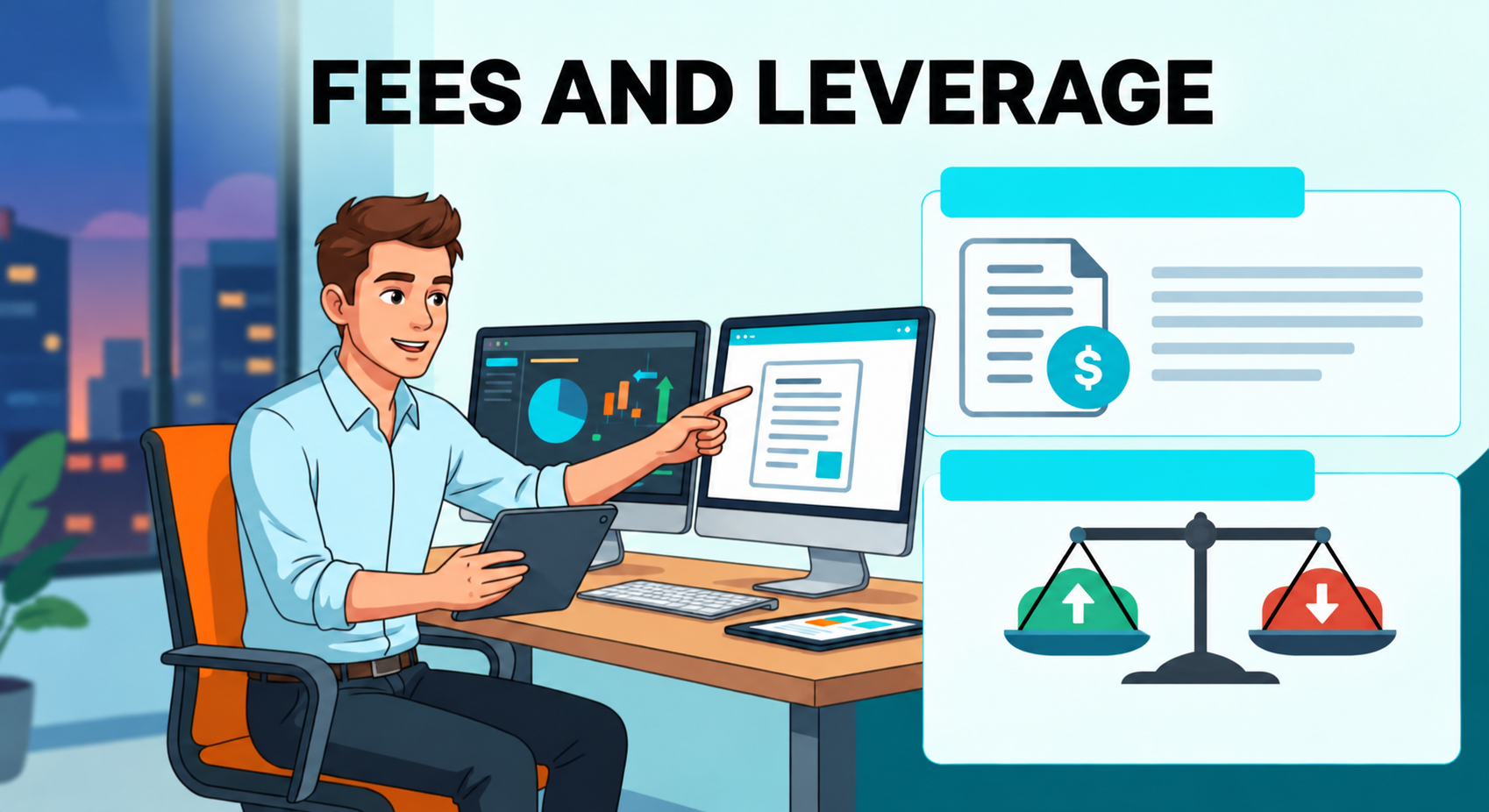
Bitget uses maker/taker pricing according to whether the executed order adds or removes order-book liquidity. Check the actual fill role and charged fee. Fee FAQ (checked October 18, 2026).
- Maker execution: an order adds liquidity before it is filled. The account/product schedule determines the fee; not every limit order is a maker.
- Taker execution: the order removes existing liquidity. Use the actual account/product rate rather than assuming every product has the same fee difference.
Maker status is determined by execution, not merely the limit-order label. Review the fill details and fee currency; a lower fee does not make an unfilled or adverse trade profitable.
Fee and leverage checks instead of an unverified competitor ranking
The former unnamed-competitor comparison and interface scores had no reproducible methodology. The table now identifies records to check rather than ranking platforms.
| Review item | What to verify | Limitation | Evidence |
|---|---|---|---|
| Maker/taker | Fill role in actual trade details | A limit order can be a taker | Current official terms and actual account record |
| Rate | Current product, tier and account fee | No fixed referral discount inferred | Current official terms and actual account record |
| Other costs | Funding, spread and withdrawal quote | Trading fee alone is not total cost | Current official terms and actual account record |
| Rebate | Actual qualifying fee and credited amount | Partner commission is not the user rebate | Current official terms and actual account record |
Strategic Leverage Management
Leverage limits vary by contract and position tier. There is no generally safe 3x-to-5x range; consider total exposure, liquidation conditions and ability to absorb a loss.
Key Risks to Consider:
- Liquidation: review the mark-price and maintenance-margin rules for the actual contract. Entry price and leverage alone are insufficient.
- Funding: check the rate, next settlement and interval on the contract screen. Intervals can differ; the former universal eight-hour rule was incorrect. Funding-interval update (checked October 18, 2026).
- Collateral scope: verify isolated/cross settings, shared balances and automatic margin addition. Do not assume every other balance is protected.
There is no universal professional or beginner margin mode. Shared collateral can spread losses; isolated collateral can be depleted and may be supplemented under enabled settings.
Monitor the actual margin ratio and contract notices. Market alerts and account controls may be delayed and do not guarantee time to close before liquidation.
Copy trading: account settings and execution differences

This article has no substantiated months-long copy-trading test. The official order-limit guide explains why a follower position may be capped, reduced or not opened. Copy order limitations (checked October 18, 2026).
Copy-trading performance records: what to check
Review the reporting period, open losses, leverage, position concentration, fees and changes in strategy. A selected 90-day return or high win rate does not prove future reliability.
| Review item | What to verify | Limitation | Evidence |
|---|---|---|---|
| History | Period, open losses and methodology | Past results do not forecast returns | Current official terms and actual account record |
| Win rate | Loss size, costs and sample | High win rate can coexist with a net loss | Current official terms and actual account record |
| Drawdown | Definition, leverage and observation period | Historical drawdown is not a future loss cap | Current official terms and actual account record |
| Exposure | Concentration and correlation | Multiple labels do not ensure diversification | Current official terms and actual account record |
Step-by-Step Guide to Copy Trading
- Step 1: Navigate to the Copy Trading tab on the Bitget main menu.
- Step 2: Use the filter tools to sort by ROI, AUM (Assets Under Management), and risk levels.
- Step 3: inspect the trader and supported instruments before opening any follow configuration.
- Step 4: check the copy mode and its actual sizing formula; the available settings depend on the copy-trading version.
- Step 5: review supported risk settings and how they apply. Recheck actual open positions because configured limits do not guarantee a maximum realized loss.
Automation needs monitoring
A follower can experience different results from a lead trader. Monitor missed orders, concentration, margin and the effect of stopping copying; do not assume existing positions close automatically.
Following more than one trader or mixing manual and copied trades does not ensure diversification. Correlated exposures can accumulate across strategies.
Reward eligibility is separate from copy-trading performance
A reward may have account, product, timing and usage restrictions. Neither KYC nor a first deposit establishes a particular bonus or a reduction of trading risk.
Reward terms to inspect
- Task rules: identify whether the particular reward applies to your account and existing activity.
- Deposit conditions: check the exact eligibility and cancellation terms; no welcome amount is assumed.
- Coupon treatment: confirm the actual eligible fee and deduction entry, rather than increasing trading to use a coupon.
Pros and Cons: Is Bitget the Right Choice for Your Crypto Journey?

Assess eligibility, custody, execution costs and product complexity separately. This article does not establish a platform ranking or suitability for a particular investor.
Features that require account-level checks
Liquidity and execution quality vary with market, size and time. This guide has no independent order-book or latency measurements and cannot promise low slippage.
- Order types: check supported instructions and their cancellation/fill conditions in the actual product.
- Copy trading: automatic order following still exposes the account to losses and execution differences.
- Order-book depth: visible liquidity can change before execution; large orders are not guaranteed to fill at the displayed price.
The Potential Drawbacks
Despite its strengths, users must be aware of the complexities inherent in such a feature-rich environment. The user interface can feel overwhelming for absolute newcomers who are not familiar with financial terminology.
- Interface Complexity: The abundance of tabs and settings can distract users from simple spot trading activities.
- High Leverage Risks: Bitget allows for high leverage, which can lead to rapid capital depletion if risk management is not strictly applied.
- Regional access: product and account eligibility can change. KYC completion alone does not establish authorization in a jurisdiction.
Compare evidence rather than exchange star ratings
The former cross-exchange scores were not supported by a documented test. Check the same instrument, account tier, order size and observation window when comparing costs or execution.
| Review item | What to verify | Limitation | Evidence |
|---|---|---|---|
| Product access | Same instrument, account and region | Brand-level labels are insufficient | Current official terms and actual account record |
| Execution | Same order size, route and timestamp | No liquidity or latency winner established | Current official terms and actual account record |
| Cost | Actual fees and other charges | No overall profitability ranking | Current official terms and actual account record |
| Support | Current scope and observed response record | No guaranteed response time | Current official terms and actual account record |
| Custody | Entity, reserve scope and withdrawal rules | No comparative safety score established | Current official terms and actual account record |
Limits of the assessment
No market-leader claim or expert endorsement is established. Decide whether the actual contract and custody risks are understandable and acceptable before considering any use.
A demo environment can help explain controls but is not evidence of achievable real-money fills, access rights or expected returns.
Bitget futures risk controls and limitations

Futures losses can result from price moves, leverage, fees, funding and execution constraints. A disciplined process cannot guarantee capital survival.
A fixed 2% rule is not a protection guarantee or universal allocation recommendation. Estimate possible loss and consider that gaps, slippage or liquidation can exceed a planned stop.
Essential Risk Management Tools on Bitget
- TP/SL: confirm trigger type, accepted order status and execution limitations; an automated exit is not assured.
- Margin mode: inspect the actual collateral scope and automatic margin settings, rather than assuming isolated margin protects every other asset.
- Funding direction: when the rate is positive, longs normally pay shorts; when negative, shorts normally pay longs. Check your position side and settlement conditions.
Strategic Comparison of Risk Management Features
| Review item | What to verify | Limitation | Evidence |
|---|---|---|---|
| Trigger | Price reference and accepted condition | Triggering does not ensure a fill | Current official terms and actual account record |
| Execution | Order type and actual fill | Market orders can slip; limits may remain unfilled | Current official terms and actual account record |
| Sizing | Notional exposure and contract parameters | A lot/quantity cap is not a loss cap | Current official terms and actual account record |
| Monitoring | Existing positions, margin and cancellations | Automation can require intervention | Current official terms and actual account record |
Leveraging Bitget’s Specialized Trading Features
No trading feature is established here as a way to improve profitability. Treat copied performance as historical, account-dependent information rather than a forecast.
Inspect concentration, leverage, open losses and the period covered by performance data. A smooth past curve is not a guarantee of future results.
Copy-trade configuration checks
- Identify the actual available filters and copy version; labels such as stable returns are not guarantees.
- Check the trader’s profit-sharing terms, the costs shown in your account and the period covered by the records. Historical results do not establish suitability or future returns.
- Inspect copy stop settings and existing positions; realized loss may differ from the requested threshold.
- Consider aggregate exposure across accounts and traders. No allocation percentage or diversification benefit is established by this guide.
A journal can document decisions and actual outcomes, but this article has no dataset showing that a particular habit separates profitable traders from others.
Frequently Asked Questions About Bitget Futures and Bonuses
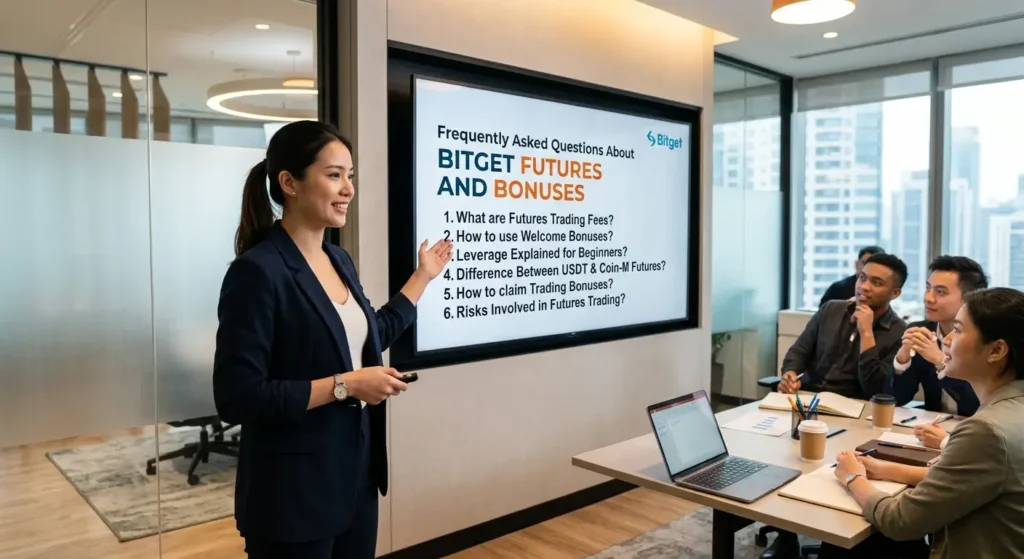
The answers below concern product conditions and risk, not a method to maximize rewards.
Common Questions from Bitget Users
- Q: Does completing KYC guarantee futures access or a bonus? A: No. Product access and rewards depend on current account, region and specific terms; KYC alone is insufficient.
- Q: Are all trading bonuses withdrawable? A: No universal rule is established here. Read the individual reward terms, including credit withdrawal restrictions, expiry and effects on real balances.
- Q: Does a bonus automatically cover a futures loss? A: Do not assume so. Confirm the supported product, deduction order and usage restrictions in the particular terms and account record.
- Q: Does a stop-loss make leveraged futures safe? A: No. Slippage, gaps, rejected orders and liquidation can cause losses beyond the intended exit level.
Comparison: Standard Futures vs. Copy Trading
| Review item | What to verify | Limitation |
|---|---|---|
| Control | What the follower can change | Automation does not eliminate monitoring |
| Sizing | Actual copy mode and quantity calculation | Copied orders may differ from the lead |
| Execution | Accepted orders and fill records | Orders can be missed or partially filled |
| Costs | Fees, funding and applicable profit sharing | No single universal copy fee model |
| Outcome | Aggregate exposure and actual losses | Copying does not establish suitability |
Final Summary and Insights
The guide explains conditions and limitations, not a path to profitable futures trading. Account security and order controls do not remove market, custody or regulatory risk.
Final checks before relying on a product description:
- Eligibility: confirm that the contract is permitted for the account and region.
- Costs: reconcile trading fees, funding and any actual reward deductions separately.
- Sources: use the current contract rules and official notices; an older guide can become outdated.
- Execution risk: check order status and collateral exposure; a configured stop is not a guarantee.
No consistent-profit claim or personal trading result is established by this article. Financial loss, including loss of margin, remains possible.
Related guide: Bitget Hedge Mode vs One-Way Mode 2026: Rules, Reduce-Only & Switching
Official sources and limits of this correction
Sources checked October 18, 2026. Historical documents are identified as such; they do not establish a current promotion or eligibility. Account, product and regional conditions can change.
BitQED is an independent informational site and may receive affiliate commissions through existing partner links. No fixed user benefit is established by those links. Cryptocurrency, leverage, custody, stablecoin, technical and regulatory risks remain. This article is not investment, legal or tax advice.