BITGET SAFETY REVIEW · 2026
Bitget publishes Proof of Reserves reports, maintains a protection fund, and provides account-security controls, but no crypto exchange is risk-free. A safety review should separate platform disclosures from user-side security and should explain what each measure does not guarantee.
Last reviewed: August 15, 2026
Risk and affiliate disclosure: BitQED may receive compensation from eligible activity through the link. That relationship is not evidence that funds are guaranteed. Crypto platforms, accounts, and leveraged products can suffer loss.
Bitget Account Security Guide 2026: Passkeys, 2FA, Anti-Phishing & Withdrawal Protection
Short answer: is Bitget safe?
Security-context check: 2026-10-25; the earlier general review date is retained.
Bitget’s incident account, updated 2026-10-20, reports unauthorized transfers from part of its exchange hot/warm wallet infrastructure on 2026-09-24 at 18:31 UTC (2026-09-25 at 03:31 KST), and completion of phased withdrawal restoration on 2026-10-02. These are Bitget’s statements, not an independent incident audit by BitQED. Check current service status separately. Official source
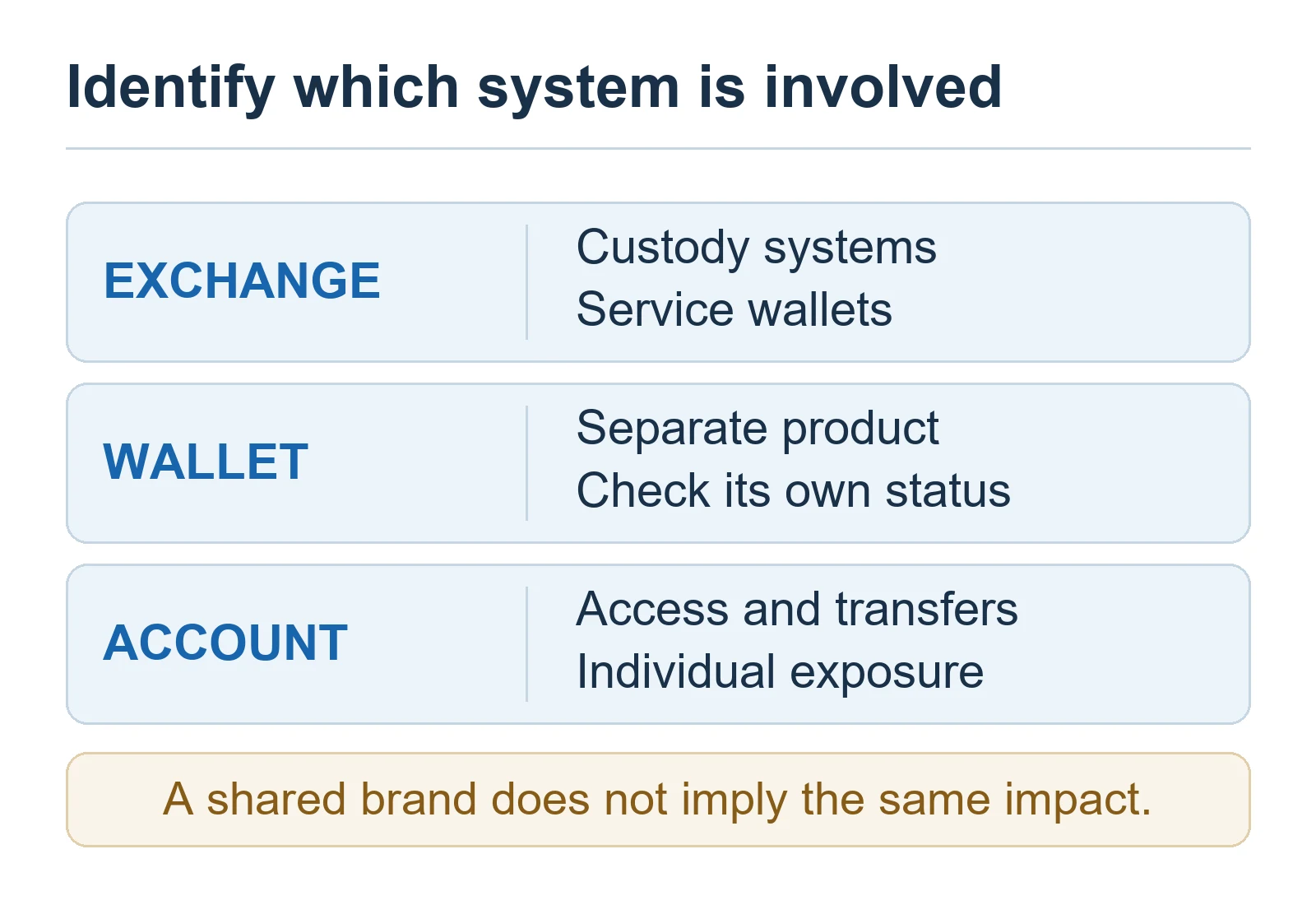
Bitget provides several controls and public disclosures that are relevant to safety, including monthly Proof of Reserves updates, a protection fund, two-factor authentication, anti-phishing codes, withdrawal whitelists, device management, and API permissions. These measures reduce or illuminate some risks; they do not remove cyber, operational, market, counterparty, liquidity, or regulatory risk.
Six layers to evaluate
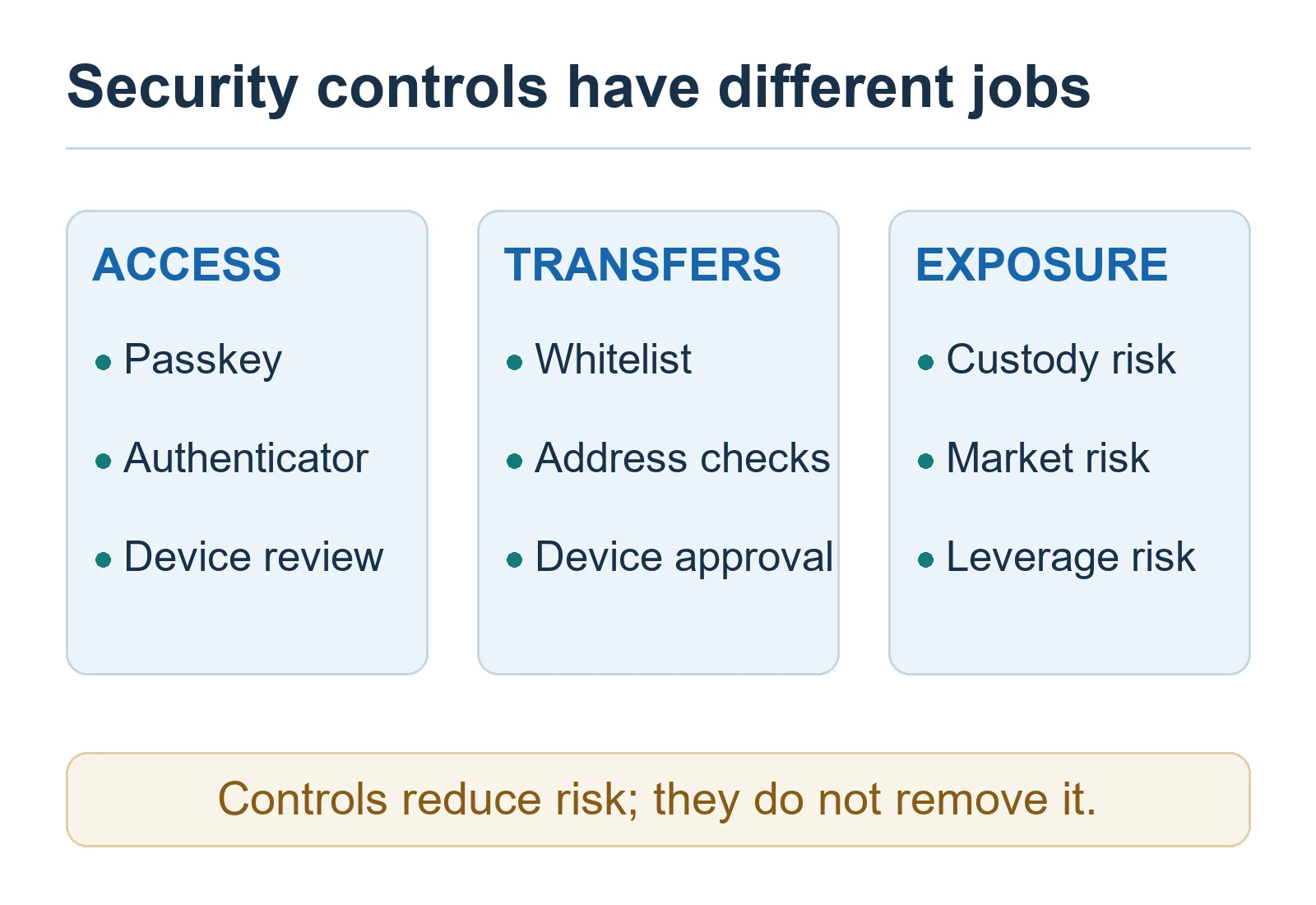
1. Account access
2FA, anti-phishing codes, device review, passkeys where available, and unique passwords help prevent unauthorized access.
2. Asset disclosure
Proof of Reserves offers a point-in-time view of specified on-chain assets and user verification data.
3. Loss-response resources
A protection fund is an additional resource under platform rules, not universal deposit insurance.
4. Product risk
Spot, futures, copy trading, lending, and third-party transfers have different loss, leverage, and operational risks.
5. Jurisdiction
Service availability, regulatory status, identity requirements, and recourse differ by country.
6. User behavior
Phishing, reused passwords, malicious API permissions, wrong networks, and excessive leverage can defeat platform controls.
Bitget Proof of Reserves: useful but limited
The June figures below are historical. Bitget’s 2026-09-29 snapshot reported a 131% total reserve ratio across 19 covered assets. This company-published snapshot is not a complete audit of all liabilities, controls or future liquidity. Official source
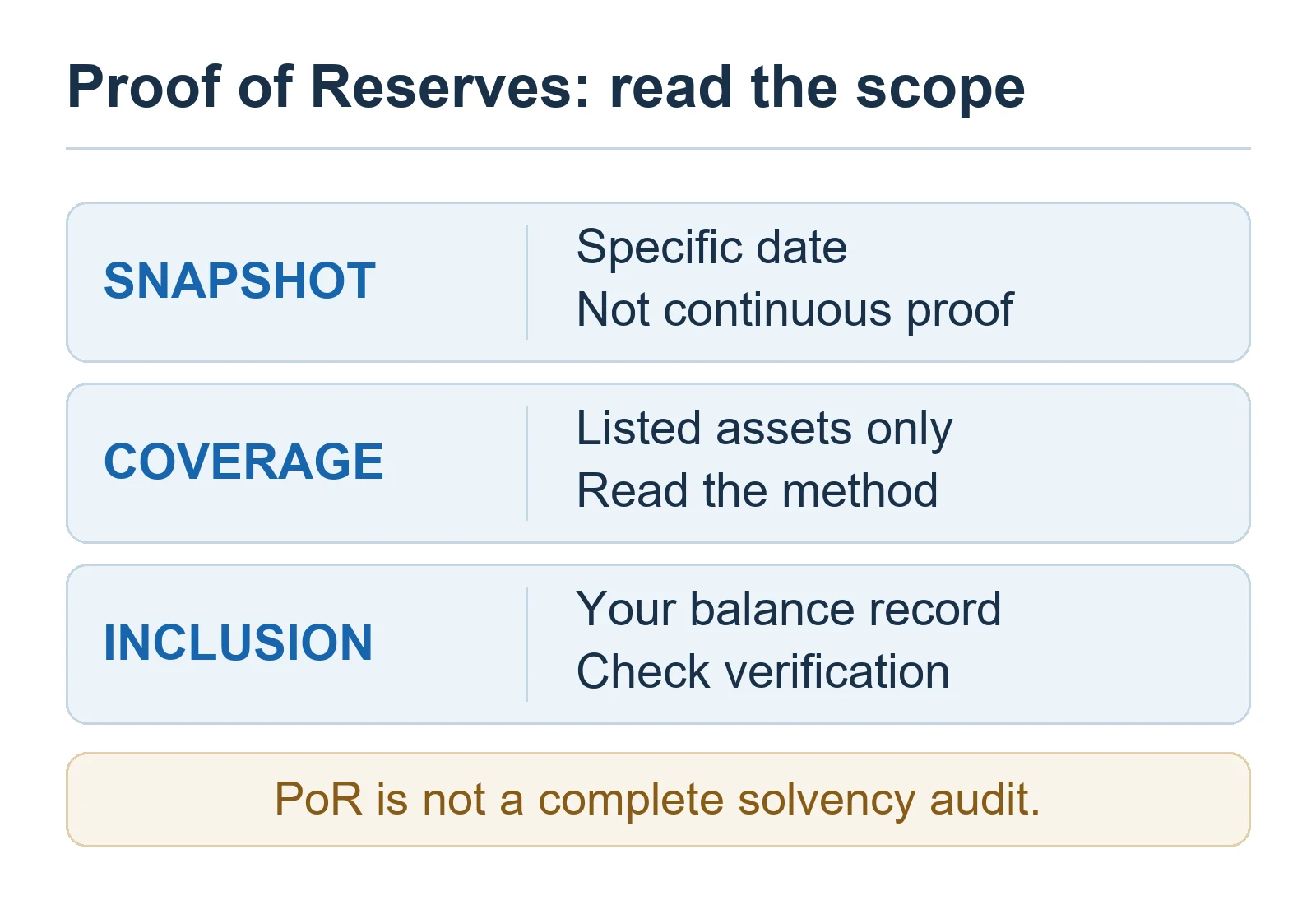
Bitget’s June 2026 Proof of Reserves release reported a total reserve ratio of 123% and described it as the 43rd update since the program began in December 2022. Bitget says users can verify inclusion using its Merkle-based tool.
A Proof of Reserves report is not the same as a complete audited financial statement. It may not provide a full view of corporate liabilities, off-chain obligations, legal claims, controls, or future liquidity. Review the report date, covered assets, verification method, and whether your own balance can be verified.
Protection fund: what the June 2026 report says
In its 2026-09-30 release, Bitget said the fund was replenished above US$300 million after the September incident, with the fund designated to cover approximately US$388 million of financial impact and user account balances reportedly unaffected. These are company disclosures, not deposit insurance or a guarantee of future compensation. Official source
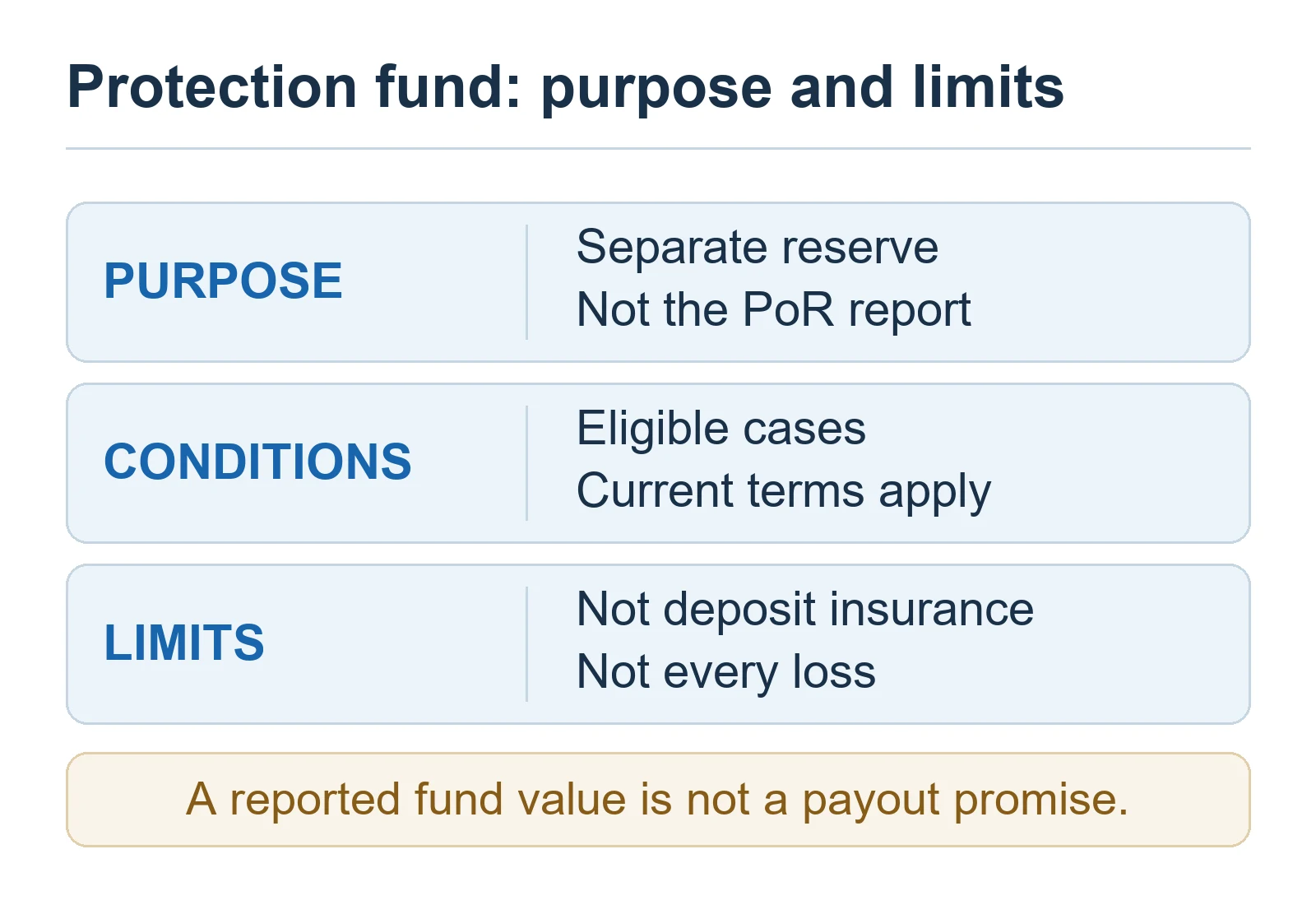
Bitget’s June 2026 report stated a protection-fund high of about $392 million, a low of about $322 million, and a monthly average of about $346 million. Bitget says it intends to maintain the fund above $300 million.
The fund’s market value changes with its assets and it should not be described as government-backed deposit insurance or as a promise to reimburse every loss. Coverage decisions, eligible incidents, claims, and procedures depend on the platform’s current rules.
Account security checklist
- Use a unique password stored in a trusted password manager.
- Enable the strongest available 2FA method and keep recovery information offline.
- Set an anti-phishing code so authentic platform emails are easier to distinguish.
- Enable withdrawal-address whitelisting and a new-address lock where available.
- Review logged-in devices and revoke sessions you do not recognize.
- Create API keys with the minimum permissions; avoid withdrawal permission unless essential.
- Bookmark the official domain and do not log in through unsolicited messages or ads.
- Test a new deposit or withdrawal address and network with a small amount.
- Keep only the amount needed for the intended platform activity.
Withdrawal and network risks
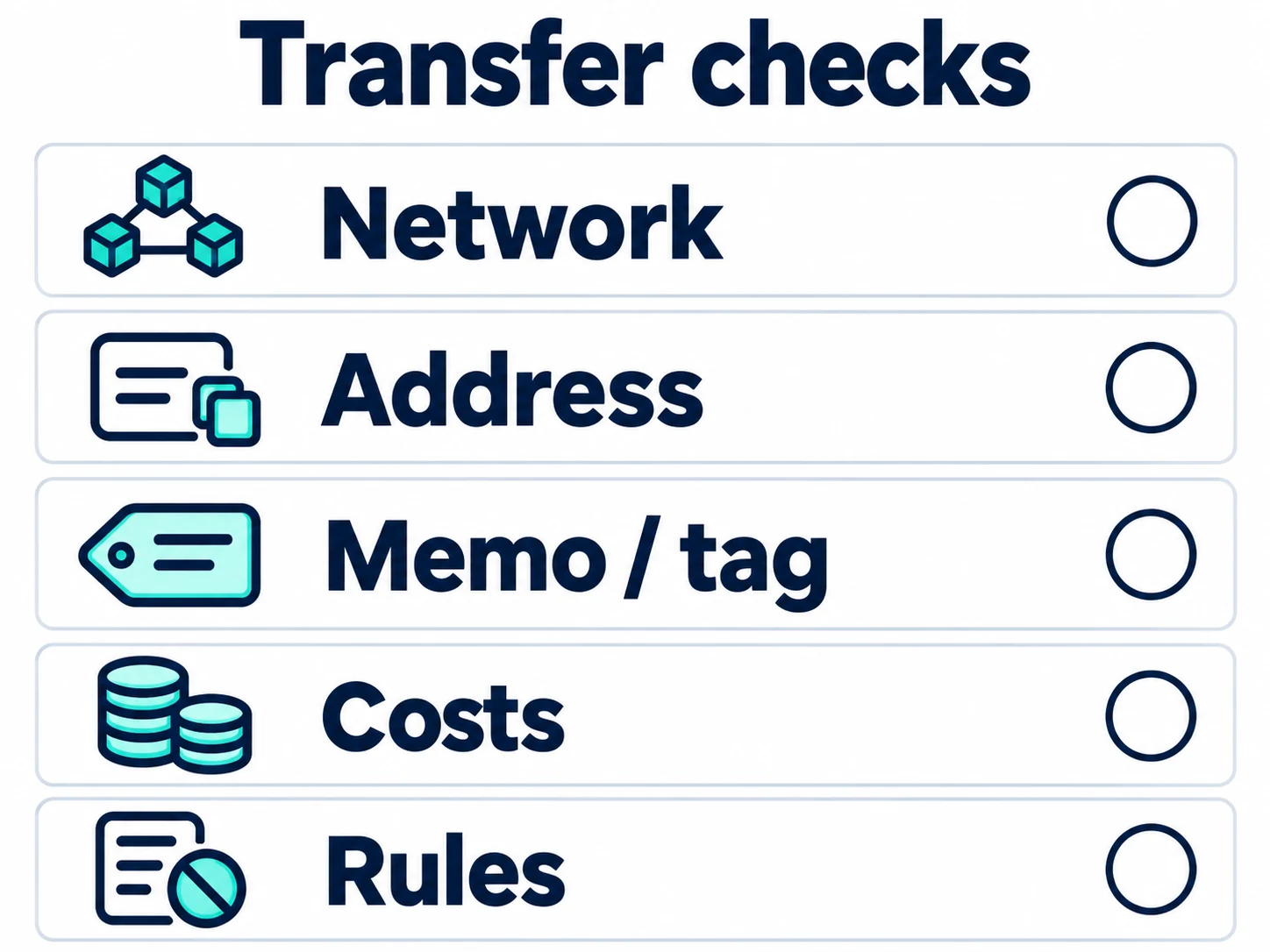
Most blockchain transfers cannot be reversed. The selected asset, network, destination address, memo or tag, and receiving-platform support must all match. Malware can replace clipboard addresses, and impostor support agents can pressure users to bypass security controls. Compare the entire destination address against a trusted source, not only its first and last characters. Use verified whitelists and never share a one-time code. Official source
See the Bitget deposit and withdrawal guide for a network checklist.
Futures and copy trading add separate risk
Exchange security does not protect a user from market loss or liquidation. Futures leverage can consume margin quickly, and copy-trading followers can receive different prices and sizes from the lead account. Set position, leverage, and total loss limits before using either product.
Use the Bitget risk management guide and copy trading guide.
Red flags that require a pause
- A message asks for a password, 2FA code, seed phrase, or remote access.
- An API key is requested with withdrawal permission for a trading service.
- A domain is misspelled or a browser warning appears.
- A promoter claims Proof of Reserves guarantees every customer asset.
- A protection fund is presented as government deposit insurance.
- Guaranteed profit or risk-free leveraged trading is attached to an account link.
- Support instructions require sending funds to “verify” or “unlock” an account.
Bitget safety FAQ
Does Proof of Reserves guarantee solvency?
No. It is useful point-in-time evidence for covered assets and verification, but it is not a complete view of all liabilities, controls, and future liquidity.
Does the protection fund reimburse every loss?
No. It is not universal deposit insurance. Current platform rules determine eligible incidents and procedures.
What should I enable first?
Use a unique password, strong 2FA, an anti-phishing code, withdrawal whitelisting, device review, and minimal API permissions.
Can an account still lose money if the platform is secure?
Yes. Market moves, leverage, liquidation, copy trading, scams, and transfer mistakes create risks separate from platform custody controls.
Verdict
Bitget publishes meaningful safety disclosures and offers useful account controls. The responsible conclusion is not “completely safe” or “unsafe” from one metric: verify current reports, apply strong account controls, limit platform exposure, and treat leveraged products separately. This review does not rely on unverifiable personal experience or satisfaction surveys. See BitQED’s editorial policy.